Hugo Becker · 17 October 2026
Analyzing IoT Sensor Integration Patterns Across Multi-Modal Freight Hubs for Delay Prediction
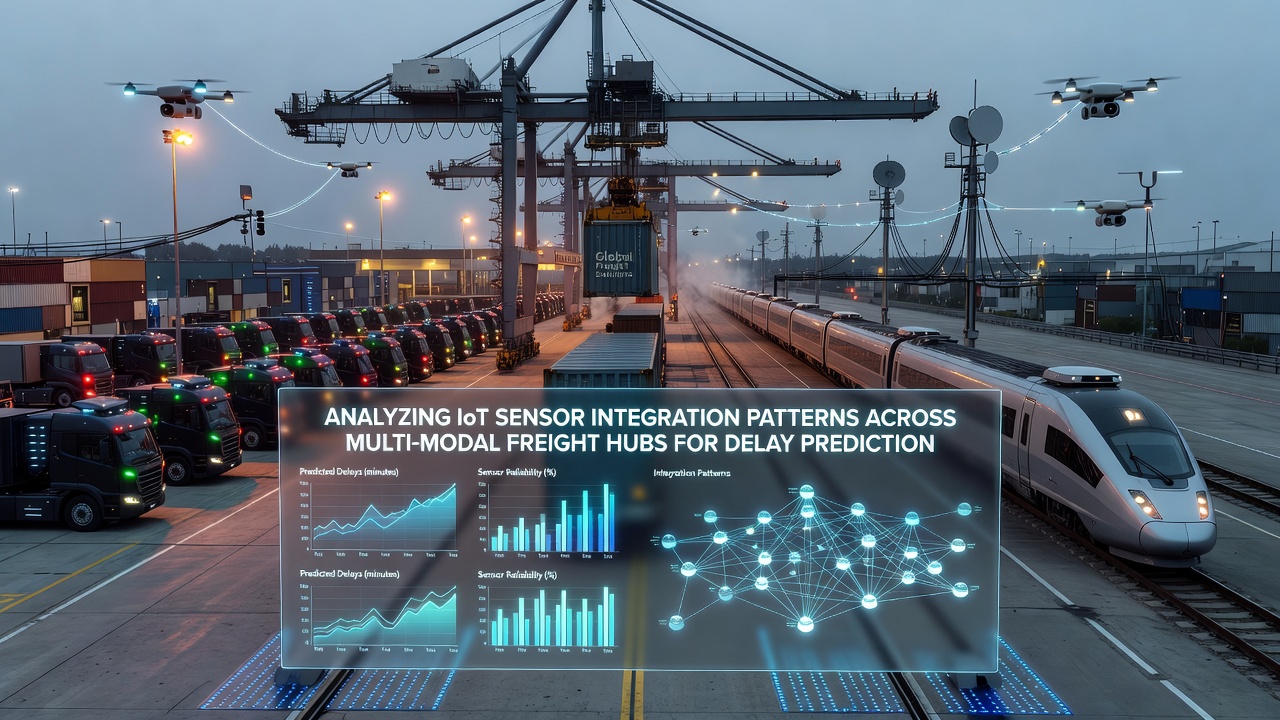
Multi-modal freight hubs combine rail, truck, maritime, and air cargo operations in single locations, and operators now rely on integrated IoT sensor networks to track movement and environmental conditions that signal potential delays. These networks pull data from GPS units, RFID tags, vibration monitors, and temperature probes, then route the information through both edge processors and central platforms so analysts can identify patterns before disruptions grow. In October 2026 several large North American and European terminals completed upgrades that standardized sensor communication protocols, allowing cross-operator data sharing without custom middleware.
Core Sensor Types Deployed at Major Hubs
Engineers place location sensors on containers and chassis while mounting environmental units inside reefers and on loading equipment, and each category feeds distinct data streams that reveal different delay risks. Location data arrives every few seconds from GNSS receivers combined with cellular or LoRaWAN backhaul, whereas vibration and shock sensors capture handling events that often precede equipment failures. Temperature and humidity readings help predict spoilage-related holds, especially on routes that shift between climate-controlled rail cars and open truck decks. Observers note that terminals running all three sensor classes together achieve earlier warnings than sites using only location tracking.
Integration Patterns Observed in Practice
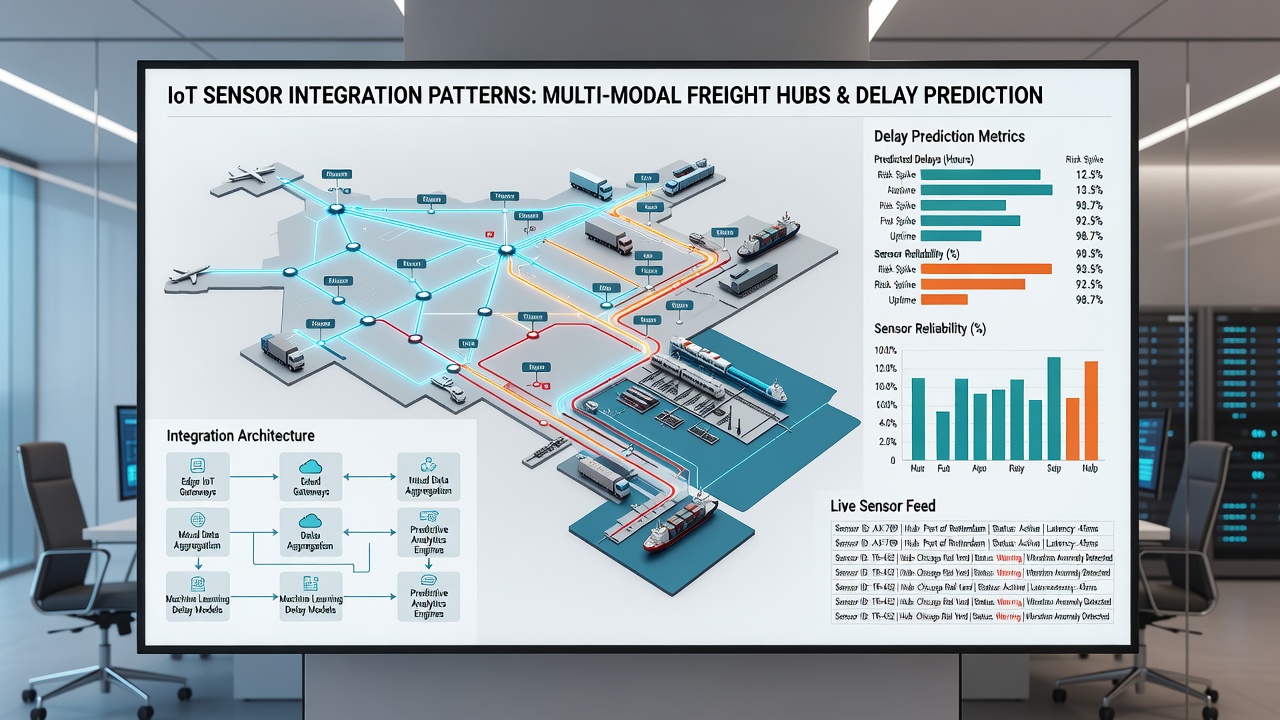
Hub operators follow two primary integration patterns, one centralized through a single cloud tenant and another distributed with edge gateways that preprocess data before transmission. The centralized model simplifies compliance reporting yet creates latency when bandwidth drops during peak import surges, while edge gateways filter noise locally and forward only anomaly alerts. Research from the Canadian Transportation Agency shows that sites using hybrid edge-cloud setups cut average data transmission volume by 38 percent without losing delay-prediction accuracy. Those who studied this know the choice between patterns often hinges on existing fiber infrastructure and regulatory requirements for data residency.
Data Patterns That Predict Delays
Analysts examine time-series correlations between sensor readings and historical delay records, and several recurring signals stand out. Sudden clusters of vibration alerts on a single rail spur frequently precede track obstructions or switch failures by 45 to 90 minutes. Temperature spikes inside reefers correlate with customs holds when inspectors flag suspect readings, and GPS speed drops across multiple trucks on the same access road indicate gate congestion that will ripple into vessel loading windows. A 2025 study released by the Australian Department of Infrastructure found that combining these three signals into a single machine-learning feature set raised delay-prediction precision from 71 percent to 84 percent at the Port of Melbourne.
Model Training and Validation Approaches
Teams train supervised models on labeled delay events while using unsupervised techniques to surface previously unseen sensor combinations that still produced late departures. Validation occurs through rolling windows that test models against the most recent 30 days of hub activity, and retraining cycles run weekly to accommodate seasonal cargo shifts. One terminal operator in Rotterdam reported that models retrained after the October 2026 protocol update maintained stable performance even when new sensor vendors joined the network. Data shows that models incorporating both edge-filtered alerts and raw centralized streams outperform those relying on a single source.
Operational Adjustments Driven by Sensor Insights
Dispatch teams now reroute trucks when sensor clusters indicate upcoming gate backups, and rail schedulers adjust dwell times when vibration patterns suggest equipment stress. These adjustments reduce missed vessel cutoffs and lower detention fees paid by cargo owners. European Commission transport statistics for 2025 indicate that hubs publishing sensor-derived delay forecasts to partner carriers saw a 12 percent drop in average truck turnaround time compared with the prior year. The same reports note that smaller operators without direct sensor access still benefit when larger hubs share aggregated probability scores through neutral data exchanges.
Challenges in Scaling Sensor Networks
Power supply limitations at remote yard locations force some sensors to operate on battery or solar, which restricts sampling frequency during extended cloudy periods. Cybersecurity requirements also shape integration choices, because centralized architectures present larger attack surfaces than distributed gateways that keep raw data inside the terminal perimeter. Figures from the U.S. Department of Transportation reveal that terminals adopting zero-trust segmentation around IoT gateways experienced 60 percent fewer unauthorized access attempts in 2026 than those using perimeter firewalls alone. Observers note that addressing these constraints early prevents costly retrofits once networks exceed several thousand active devices.
Conclusion
IoT sensor integration across multi-modal freight hubs continues to evolve through standardized protocols and hybrid processing architectures that balance latency with regulatory needs. Patterns extracted from location, vibration, and environmental readings now feed delay-prediction models that support real-time operational changes. As more terminals complete 2026 upgrades, the volume and consistency of available data are expected to increase, allowing further refinement of the signals that reliably precede disruptions.