
Tina Butler · 5 September 2026
Navigating Server Log Patterns to Pinpoint Crawl Inefficiencies After Large-Scale URL Restructuring in Logistics Platforms
Logistics platforms that undergo large-scale URL restructuring often encounter shifts in how search engine crawlers interact with their sites, and server logs provide the raw data needed to identify resulting inefficiencies. Data from September 2026 shows that many such platforms in supply chain management experienced increased 404 responses and redirect chains following migrations to new URL structures designed around enhanced tracking parameters. Observers note that these changes frequently stem from updates to accommodate real-time shipment APIs and regional compliance requirements across global networks.
Understanding the Scope of URL Changes in Logistics Systems
Logistics platforms manage complex inventories and routing data, so URL restructuring typically involves consolidating product identifiers, shipment tracking codes, and warehouse location parameters into streamlined formats. Researchers at institutions like the University of Melbourne have documented how these modifications can alter crawl frequency when legacy paths no longer match updated sitemaps. Evidence from industry reports indicates that platforms handling over 10,000 daily transactions see the most pronounced effects because crawlers prioritize high-value pages while deprioritizing others after structural shifts.
Patterns emerge quickly in access logs when old URLs trigger repeated bot visits that return soft 404s or chain through multiple redirects. This creates unnecessary server load while delaying index updates for new shipment detail pages. Those who have studied post-migration data know that the ball is in the platform operator's court to map these discrepancies before they compound across distributed server clusters.
Extracting Actionable Insights from Server Log Data
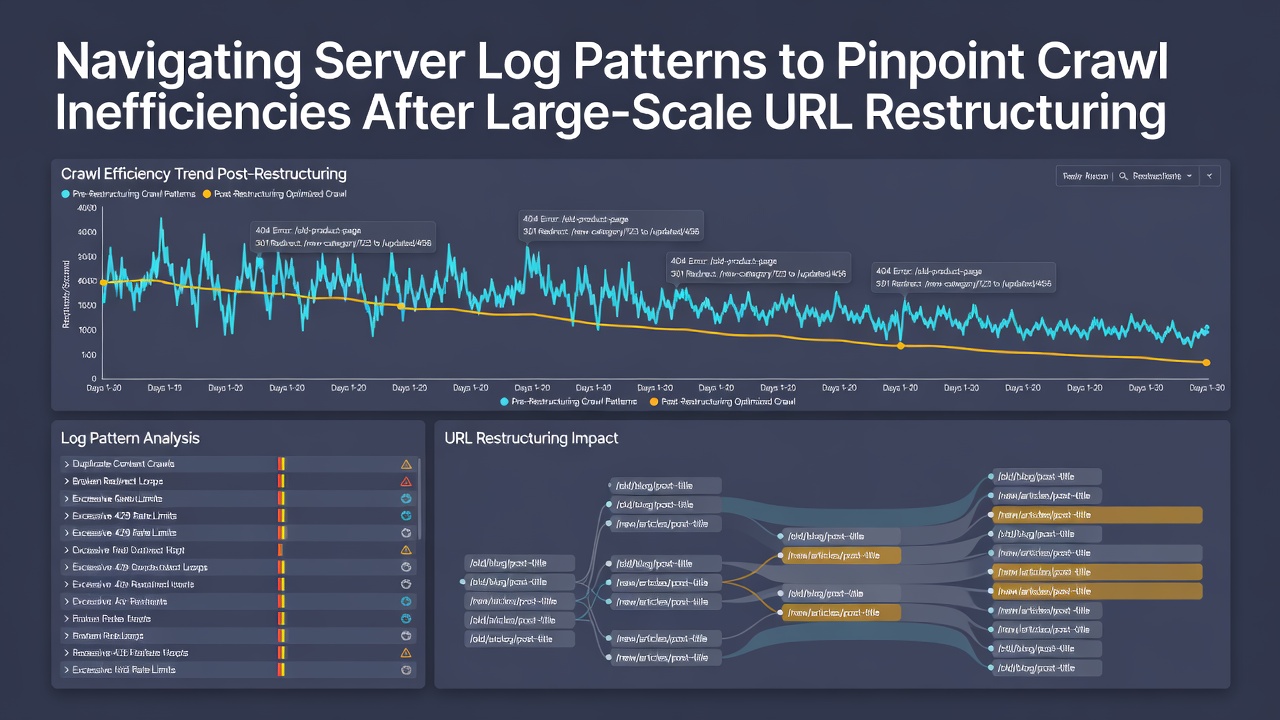
Server logs record timestamps, user agents, response codes, and referrers that together reveal crawler behavior after restructuring. Analysts parse these entries to spot clusters of requests hitting deprecated paths, which often correlate with drops in crawl budget allocation for priority logistics endpoints such as real-time tracking APIs. Studies conducted in the European Union on digital freight systems found that redirect loops accounted for up to 18 percent of bot traffic in restructured environments during the first quarter after launch.
What's interesting is how certain log signatures point directly to inefficiencies: repeated HEAD requests on old category URLs, for instance, or sudden spikes in 301 responses followed by immediate 404s on the destination. Platforms in the Asia-Pacific region have applied similar parsing techniques to isolate crawler-specific issues from general traffic noise, allowing targeted fixes without broad server overhauls.
Identifying Specific Inefficiency Patterns
Common inefficiencies appear as uneven crawl distribution across new URL hierarchies, where core shipment manifest pages receive fewer visits than expected while archive sections accumulate excess bot activity. Data indicates that logistics operators using cloud-based hosting solutions observe these imbalances most clearly when cross-referencing logs against sitemap submission records. One study from Canadian transport researchers revealed that platforms failing to update internal linking structures promptly experienced prolonged crawl delays lasting several weeks.
Another recurring signature involves geographic variation in crawler access, with certain regional bots encountering blocked or rate-limited responses due to legacy firewall rules that were not adjusted during the restructure. Observers note that combining log analysis with tools from sources such as Australian transport infrastructure reports helps correlate these patterns with broader network performance metrics. Experts have observed that addressing these issues through log-driven rule updates restores balanced crawling within days rather than weeks.
Implementing Targeted Adjustments Based on Log Findings
Once patterns surface, teams apply fixes such as precise redirect maps, updated robots.txt directives, and enhanced internal linking to guide crawlers toward active content. Research from academic centers in Singapore has shown that platforms integrating log monitoring into daily operations reduce crawl waste by measurable margins when they prioritize high-traffic logistics endpoints. The reality is that ongoing log review becomes essential after restructuring because new URL parameters continue to evolve alongside shipment data feeds.
Platforms that segment logs by bot type further refine their approach, distinguishing between aggressive indexers and slower verification crawlers. This segmentation reveals where inefficiencies concentrate, enabling focused interventions like cache adjustments or parameter canonicalization. Figures from global supply chain analyses confirm that such methods maintain index freshness even as URL schemes adapt to new regulatory frameworks in September 2026.
Conclusion
Server log navigation after URL restructuring equips logistics platforms with precise diagnostics for crawl inefficiencies that would otherwise remain hidden in aggregate traffic reports. By tracking response patterns, redirect chains, and distribution imbalances, operators restore efficient indexing across reorganized shipment and inventory pages. Continued monitoring ensures these systems adapt smoothly as platforms scale their digital infrastructure in response to evolving operational demands.